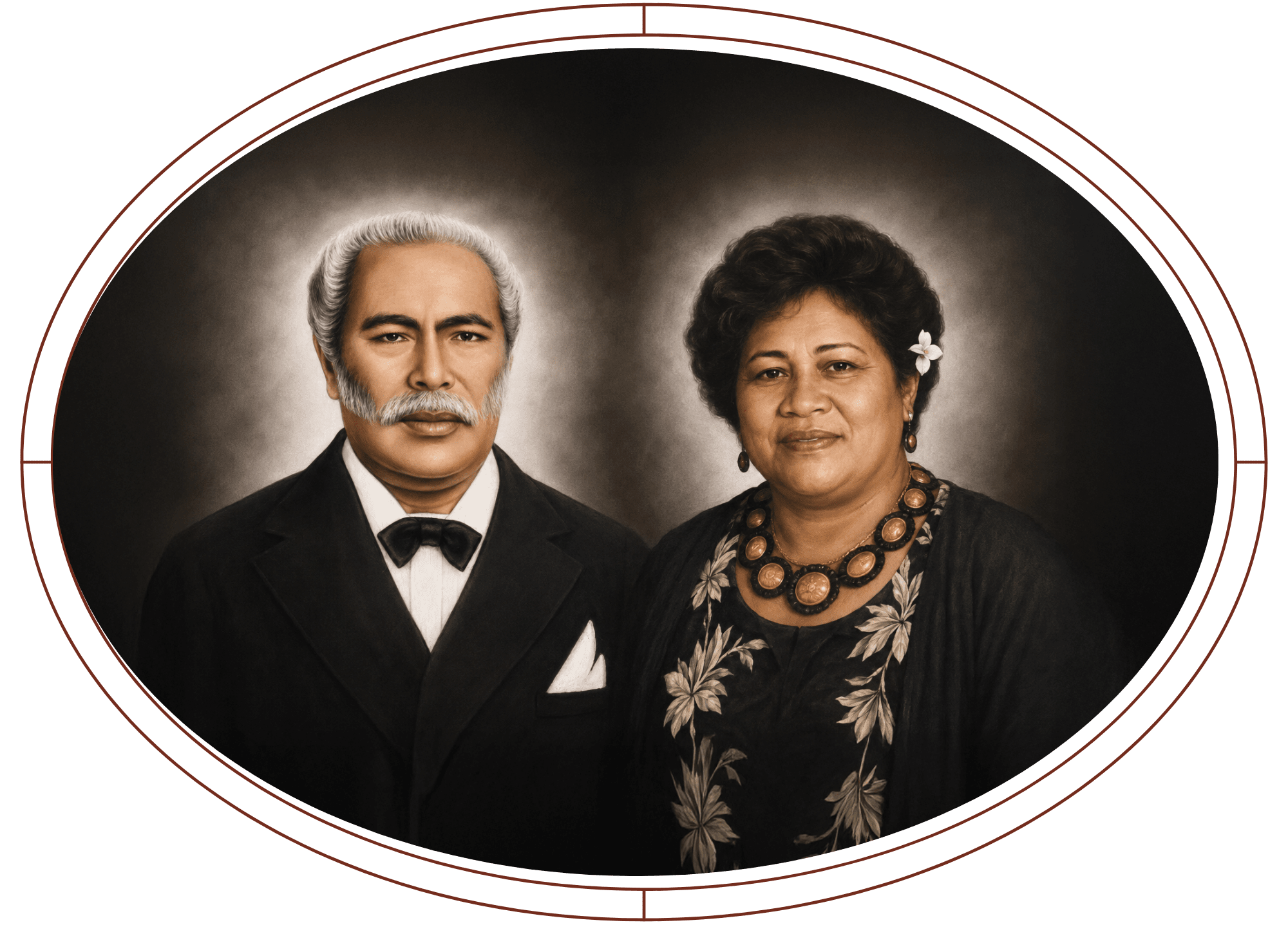
An Easy Guide to Your Samoan-Tongan Family Tree

Published July 30th, 2026
In the quiet spaces between islands and across distant shores, the threads of Samoan and Tongan families stretch wide and deep. For those who carry the names Alipate and Taiana, tracing these threads is more than a curious pastime-it is an act of honoring ancestors and keeping sacred bonds alive. Family trees in our cultures are not merely charts; they are living stories of connection, responsibility, and identity that bind us together despite the miles and years.
The Alipate-Taiana Family stands as a guardian of these stories, a multi-generational custodian who has gathered memories, genealogies, and the voices of elders for decades. Through gentle care, our family history has grown into a rich tapestry that welcomes every generation to listen, learn, and contribute. This guide opens a respectful doorway into that journey, inviting you to begin your own path in weaving the family tree with reverence and curiosity.
Understanding Samoan and Tongan Genealogical Traditions
Among Samoan and Tongan people, a family tree is not only a list of names and dates. It is a living map of covenant, duty, and blessing. When we speak of gafa and kāʻinga, we speak about who we belong to, who we serve with, and who stands behind us when we stand in the world.
In many Samoan and Tongan homes, the first records are not written on paper. They sit in the memories of elders, carried in stories of villages, voyages, marriages, and adoptions. These oral histories hold details Western genealogy often overlooks: who was fostered by which aunt, which cousin carried the family name forward, which branch carries a special responsibility to a church, village, or clan.
Samoan genealogies are deeply tied to matai titles. A title links a person to land, village, and ancestral duty. When we trace Samoan lines, we follow not only father and mother, but also the history of the title: who held it, how it passed, and which branches remain connected to that service. A Western-style chart might mark one legal parent, but a Samoan story remembers the wider circle of those who raised, claimed, and named the child.
Tongan genealogies place strong weight on clan lineages and rank. The kāʻinga stretches across households and islands, held together by shared ancestors and by respect for order among elder and younger lines. A Tongan chart often grows sideways as much as it grows up and down, because cousins, aunties, and uncles carry specific places and roles within the wider group.
Western genealogy tends to center the individual and the nuclear family, measured by birth, marriage, and death certificates. Samoan and Tongan genealogical traditions center the collective: obligations, titles, land rights, adopted children, church ties, and village bonds. Dates still matter, but relationships and responsibilities carry equal weight. A family tree built only from official papers will miss the heart of the story.
The Alipate-Taiana Family holds to these ways as a bridge between past and future. By honoring oral histories, clan folders, and the place of titles and lineages, we treat our records as sacred trust, not just data. When we set down a name, we remember that behind it stand voices, prayers, and generations who expect us to carry their story with care.
Gathering Oral Histories: Listening to Our Elders' Voices
When written records thin out, the spoken word steps forward. Among our people, a remembered story often carries more truth than a faded paper. For the Alipate-Taiana branches, these spoken threads are what tie village, island, and diaspora back into one mat.
The first step is not a camera or a notebook. The first step is respect. We start by approaching an elder with humility: sitting where they choose, accepting the pace they set, and letting them decide how far back the story goes. Some elders begin with a prayer or a proverb; that is part of the record, not a distraction.
Preparing To Sit And Listen
Before you visit, think through what you hope to learn. Write down simple, open questions that invite long answers, such as:
"Who were your grandparents, and where did they come from?"
"Which titles or church roles are connected to our branch?"
"Who was raised by other aunties or uncles, and why?"
"Which marriages linked us to other villages or islands?"
Keep the list nearby, but hold it lightly. In Samoan and Tongan genealogical traditions, a story flows in circles, not straight lines. If an elder wanders into a song, a joke, or a memory of a feast, that detour often hides the name or place you need later.
Recording With Care
When an elder agrees, use a simple recorder or phone. Tell them plainly what you are doing and why you are doing it, and ask their blessing. Begin by saying the date, their name, and where you are sitting. This small habit will help later when stories from many cousins start to blend.
As they speak, do not rush to correct names or dates. Let the story stand in their voice. If something is unclear, wait until a natural pause, then gently ask, "Can you say that village name again?" or "Which side of the family was that?" Active listening looks like nodding, repeating key names aloud, and giving time for silence. Sometimes a long pause means an elder is deciding whether a story is ready to be shared.
Honoring The Sacredness Of Spoken History
Within our family network, these recordings are not just genealogy resources for Pacific Islanders; they are offerings. Treat each conversation as a small ceremony. Afterward, thank the elder, and if it fits your custom, close with a short prayer or blessing.
Later, when you copy names into clan folders or digital charts, keep a note of whose voice carried that knowledge: "From Auntie's story," "From Grandpa's memory." This honors the chain of transmission and reminds younger cousins that tracing Tongan family roots and Samoan lines is more than collecting data; it is receiving trust. With patience, quiet attention, and steady reverence, we keep our elders' voices walking alongside us, not just filed away.
Using Clan Folders to Organize and Preserve Family Records
After the stories are spoken and recorded, we need a place to rest them. For our Samoan-Tongan branches, that place is the clan folder. Over time, these folders have become the backbone of the Alipate-Taiana family network, keeping each branch visible and respected while still holding us together as one extended kāʻinga.
A clan folder is simple in shape but deep in meaning. Each branch receives its own space, both in a physical binder or box and in a digital folder. Names, charts, photos, voice recordings, and documents are gathered by branch, so that no line is swallowed up by the larger crowd. In this way, we honor the boundaries and identity of each clan while still recognizing that all paths lead back to our shared ancestors.
What Belongs In A Clan Folder
We treat the clan folder as a small archive for that branch. Over time, it may hold:
A basic family tree chart for the branch, including adopted children and those raised by aunties or uncles.
Copies or scans of important papers such as birth records, marriage certificates, and memorial programs where they exist.
Printed photos with names, dates, and places written clearly on the back or in a caption.
Notes from oral histories Samoan Tongan families have shared, with dates and the name of the storyteller.
Digital files: audio recordings, scanned images, and typed transcripts stored in matching folders online.
Building And Navigating Physical Folders
For the physical side, we usually begin with a sturdy binder or box marked with the clan name. Inside, we group materials in a steady order so cousins can find their way:
Start with a front page. A simple chart or list of key ancestors for that branch gives everyone a quick map.
Group by generation. Use dividers or sections: founding couple, their children, grandchildren, and so on, making space for new arrivals.
Keep originals safe. Place irreplaceable items in clear sleeves or envelopes, and note where the digital copy lives.
Label everything. Every photo, note, or program needs names, dates if known, and who shared it.
Working With Digital Clan Folders
Our online folders mirror the physical ones, like a fale built beside its meeting house. Each branch has a named digital folder, then subfolders for generations, photos, documents, and audio. This lets cousins across islands and cities add materials without sending fragile originals through the mail.
When we add a new file, we name it in a clear way: date first, then person or event, then type. For example, a recording might read, "2024-06-15_Grandpa-story-audio." This steady pattern keeps the archive from turning into a tangle as more branches contribute.
Sharing Stewardship As A Digital Village Square
No single person carries a whole clan folder alone. One cousin may serve as the main keeper, but others act as scouts, bringing in stories, photographs, and corrections. We treat the shared digital space like a village square: a central place where branches bring their offerings, sit with each other's histories, and learn respectfully.
As we move between paper and screen, we remember that these folders hold more than data. They guard the dignity of each clan, keep Samoan and Tongan names in their correct order, and allow younger ones to step into their place in the story with clarity and reverence.
Documenting Key Ancestors: Building the Foundation of Your Family Tree
Once the clan folders are ready and the elders' voices are resting inside them, we begin to shape the backbone of the family tree: the key ancestors. These are the people whose names and relationships form the main trunks from which our branches grow.
For most Samoan-Tongan lines, we start with a founding couple or a small cluster of siblings who anchor that clan. From there, we move up and down carefully, asking: Who were their parents? Who were their children, including those adopted or raised by other relatives? Which titles, church roles, or village ties sit with them?
Choosing Whom To Record First
We usually mark these as "key" ancestors within each branch:
The founding couple or earliest known generation for that clan.
Ancestors connected to matai titles or important church or village roles.
Those whose marriages joined us to other clans or islands.
Ancestors whose descendants form large sub-branches within the kāʻinga.
In the clan folder, give each key ancestor a clear page or digital file. Write their name as the family knows it, including chiefly titles and honorifics, and then, if needed, add a simpler version for search purposes in online charts. This respects the sacred form of the name while still letting younger cousins and outside researchers find it.
Checking Names, Dates, And Connections
When documenting Samoan Tongan ancestors, we stand on at least three legs: spoken memory, family records, and any official documents we can locate.
Oral histories: Play back recordings and compare notes from different elders. If one uncle says a grandfather was the eldest child and another says second-born, write both, then add a small note such as, "order of birth remembered differently." We honor each memory while keeping the record honest.
Clan records: Many branches already hold handwritten charts, old reunion programs, or memorial booklets. When these match the spoken stories, we copy the detail into the ancestor's page and note the source: "from family reunion program," or "from Grandma's chart."
Documents: Birth and marriage records, church registers, and immigration papers often carry Western spellings of our names. We record these spellings in a smaller line under the Samoan or Tongan form, so later researchers can trace both streams.
When dates are uncertain, it is better to mark "about 1940s" or "before the war" than to guess a specific year. If we only know the sequence of events, we note it: "Married before moving to the next island," or "Children born after the title was bestowed." These anchor points still guide future generations, even without exact numbers.
Honoring Naming Customs And Titles
Names in our cultures carry rank, covenant, and memory. A single man might be known in four ways: by his birth name, by a matai or noble title, by a church role, and by a nickname known only to cousins. Instead of forcing one name to "win," we record them as layers:
Primary entry: the name and title used in formal settings, such as "chiefly or church title + personal name."
Secondary names: birth name, Western spelling, or common nickname, each labeled clearly.
Notes on inheritance: how a title passed, which village or land is tied to it, and which branch now carries that responsibility.
This method keeps our oral genealogies of the Pacific Islands intact while still giving structure. It also prevents later confusion when a title moves from one cousin to another; the title and the person each receive their own careful track in the tree.
Weaving A Living Framework
As we fill in these ancestor pages, patterns begin to show: repeated names, familiar marriages between clans, shared journeys from island to island and then outward into the diaspora. The clan folders hold these details in one place, while the stories recorded earlier give them breath and color.
Over time, the record becomes more than a list. It turns into a clear framework where each generation can see how they link back to Alipate, to Taiana, and beyond. When a child asks, "Whose name do I carry?" or "Which village calls me theirs?", we will be able to open the folders, trace the lines with a finger, and answer with confidence and reverence.
Sharing and Growing Your Family Tree Within the Alipate-Taiana Community
Once the first branches are sketched, we do not tuck them away in a drawer. Within the Alipate-Taiana family network, the next step is to bring those branches into the shared space of our online hub and blog, so the tree can breathe together as one.
We treat the digital hub as a kind of gathering fale. Clan keepers upload charts, photos, and selected audio clips from oral histories into their branch folders, then share short written summaries for the blog. A few clear paragraphs about an ancestor, a marriage between clans, or the story behind a Samoan matai title or Tongan church role give cousins across oceans a doorway into that part of the tree.
As these posts gather, they become a woven record of preserving Samoan Tongan culture: children hear the sound of ancestral names, adults rediscover forgotten links, and elders see their memories honored in writing. Each comment, correction, or added detail from another cousin is treated as another root strengthening the whole tree, not as an interruption.
Learning Together Through Workshops
The Alipate-Taiana Family also offers workshops and quiet research sessions for those who want help reading old charts, organizing digital files, or navigating questions about titles, adoptions, and blended lines. In these spaces, we sit side by side with our laptops and notebooks, comparing notes, checking spellings, and finding where one clan's record touches another.
Over time, this shared work turns genealogy into a living practice rather than a finished project. The online hub grows as new children are born, elders pass on, and long-lost branches appear from the wider diaspora. With every uploaded story, corrected date, or newly documented cousin, we strengthen our global kāʻinga and pay quiet respect to Alipate Tuʻipelehake and Taiana Suʻapaʻia, whose names still stand at the heart of our gathering.
Beginning a Samoan-Tongan family tree rooted in the Alipate-Taiana heritage is more than tracing names-it is an act of honoring our ancestors' stories, preserving sacred traditions, and sustaining the bonds that define us as a people. Through the careful gathering of oral histories, the stewardship of clan folders, and the embrace of both physical and digital records, we keep alive the living connections between generations and across oceans. These efforts weave a tapestry of identity, responsibility, and belonging that invites each of us to step into our place within the kāʻinga. As the Alipate-Taiana Family continues to grow its online platform and gather relatives near and far, we welcome you to join this shared journey. Explore the digital archives, participate in upcoming gatherings and workshops, and help carry forward the voices and memories that shape our collective future. Together, we hold the stories that will nurture our legacy for many generations to come.