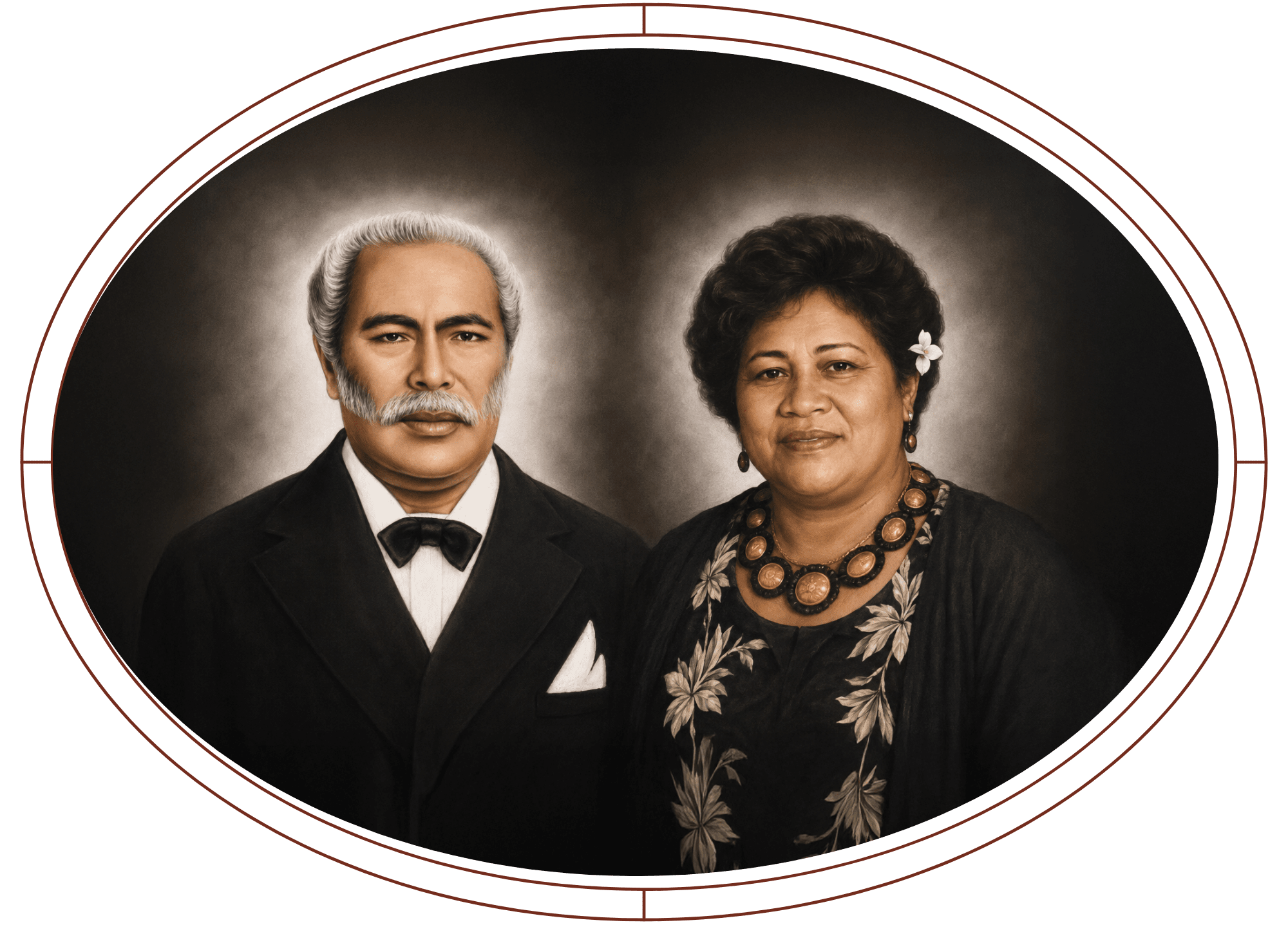
What Do Genealogy Workshops Teach About Ancestral Legacy

Published August 1st, 2026
Gathering together to explore our family roots is more than a pastime-it is a journey into the heart of who we are. Genealogy workshops serve as gentle classrooms where families and communities come to learn the art and science of tracing their ancestors, preserving the stories and traditions that define them. For Polynesian families, such as those of Samoan and Tongan heritage, these workshops hold a special place, nurturing a deeper understanding of cultural identity through ancestral legacy. They offer a space where history is not only recorded but lived, where the ties that bind us across generations are honored and strengthened. As we open this conversation, we invite you to walk with us through the teachings and insights these gatherings offer-how they empower us to safeguard our heritage and keep the spirit of our ancestors alive in the present and for those yet to come.
Fundamental Skills Taught In Genealogy Workshops: Record-Keeping And Research Methods
When we gather for genealogy workshops, we start with the steady work of record-keeping techniques. Before stories stretch across oceans and generations, we first learn how to catch each detail on paper or in a digital file so it will not slip away.
We walk through the basic records that form the backbone of any family history: birth, marriage, and death certificates, church records, census entries, and immigration papers. We show how to read these documents closely, how to notice spelling variations, dates that do not match, and places that change names over time. From there, we practice recording each fact in a consistent way so later generations do not have to guess what we meant.
Organized Record-Keeping anchors the work. Participants learn simple systems to sort and store information:
Creating family group sheets and individual profiles for each ancestor.
Labeling digital folders and physical binders by clan, generation, or island of origin.
Using clear file names and dates so documents can be found even years later.
Linking each fact to its source, so no detail stands alone without proof.
Once the records are in order, we move into basic genealogy research methods. We show how to begin with what the family already knows, then trace outward to archives, online databases, and community records. Participants practice building a family tree step by step, testing each new branch against at least one reliable source before accepting it as part of the Alipate-Taiana line.
These skills matter deeply for an extended family like ours, where about 14 distinct family clans and up to 9 generations weave together. Accurate record-keeping turns scattered memories into an organized genealogical archive. It lets us see how one cousin's birth certificate clarifies another cousin's marriage record, or how an immigration paper explains why a whole branch moved to a new land.
For the Alipate-Taiana Family, these workshops protect more than names and dates. They create a sturdy record that future children can stand on when they ask who they are, which village first spoke their names, and how their Samoan and Tongan roots spread across the world.
Exploring Polynesian Cultural Customs Through Genealogy Education
Once the charts and documents are steady under our hands, we turn toward the life that flowed through those names. Genealogy for us is never just a list of ancestors; it is a doorway into Samoan and Tongan cultural customs that shaped how our grandparents prayed, married, argued, and made peace.
In our workshops we speak plainly about fa'a Samoa and Tongan ways as they connect to each family line. We trace how chiefly titles traveled through generations, who carried them, and what duties came tied to those names. Participants learn that a title is not only honor; it holds obligations to land, church, and extended family, and those responsibilities explain many choices our elders made.
We also study family roles inside the household and village. Samoan and Tongan kinship terms map out respect: older siblings, younger siblings, maternal uncles, paternal aunts, and the special place of grandparents. During a session, we often pause over a family group sheet and ask, "Who in this household would speak first in a meeting? Who would prepare kava, who would host guests?" The answers show how genealogy and local heritage are inseparable.
Ceremonial life receives its own careful attention. We discuss weddings, funerals, fa'alavelave, kava circles, and gift exchanges, then link them back to the records. A single wedding photo becomes richer when we know why certain relatives sit in front, why fine mats or siapo are arranged a certain way, and which side of the family is expected to give or receive.
As younger generations absorb these lessons, something quiet but strong takes root. Genealogy research skills give them dates and documents; cultural teaching gives them pride and clarity. They begin to see that each certificate connects to a living pattern of values: respect for elders, reciprocity, hospitality, and faith. Understanding these customs turns a simple family tree into a story of identity that stretches from island villages to every place our descendants now call home.
Oral History Gathering: Keeping Ancestors' Stories Alive
After the records and customs are understood, we listen for something that never fits neatly into a form: the living voice. For Polynesian families, oral history has always carried what paper cannot hold. It carries tone, laughter, pauses, and the way an elder's eyes change when a certain name is spoken.
In our genealogy workshops, we treat oral history gathering as sacred work. We talk first about respect. Before any questions, we encourage participants to greet elders properly, offer a prayer if that is the family practice, and explain why the conversation matters. The goal is not to interrogate, but to invite an elder to sit in their rightful place as a keeper of knowledge.
We then teach simple interviewing techniques that keep stories flowing:
Use open questions: "Tell us about your childhood village," instead of, "Did you like it there?"
Move from easy memories to harder ones, so trust grows over time.
Listen without interrupting; let silence do its work before the next question.
Repeat key details back to the speaker to confirm names, places, and relationships.
Recording these conversations is another skill we practice. Participants learn to test audio or video devices ahead of time, state the date, place, and names at the beginning of each session, and store files with clear labels. We pair these recordings with notes that capture context: who else was present, what song was playing in the background, which language was used.
These family stories often hold memories that never reached church records or government offices: a land dispute settled by chiefs, a nickname known only inside the household, a migration guided by a dream. When added to charts and certificates, they deepen genealogy research skills with personal insight, cultural anecdotes, and spiritual threads that explain why ancestors chose certain paths.
For the Alipate-Taiana Family, storytelling has long been woven into reunions where hundreds gather to eat, sing, and remember. Our digital archive grows from that same practice. We now teach relatives to bring those spoken stories into an online home, so a grandchild across the ocean can hear an aunt's voice or watch an elder describe an island long left behind. In this way, oral history does more than decorate the family tree; it breathes, sings, and prays within it, keeping our ancestors' legacy present for generations yet to come.
Integrating Modern Tools: DNA Testing And Digital Platforms In Polynesian Genealogy
As our family work has grown, we have learned that ancestral knowledge now travels through test tubes and touchscreens as well as talanoa. Modern Polynesian genealogy workshops bring these tools close, but we handle them with the same care we give to fine mats and chiefly names.
When we speak about DNA testing, we start with purpose and boundaries. We explain that DNA results do not replace oral history or church records; they sit beside them. The reports help confirm known relationships, test whether two branches share a common grandparent, or show how Samoan and Tongan lines connect to other Pacific and global migrations. Sometimes they reveal a quiet surprise: a cousin in another country, a branch that drifted away after an old migration or adoption, now visible again through shared segments of DNA.
Workshops guide relatives through reading those charts and percentages in plain language. We look at which results support what our elders always said, and where the science asks us to revisit an assumption. At each step, we stress consent and dignity. No one is pressured to test. No story is forced into the open. The aim is to protect whakapapa and gafa, not to expose private pain.
Alongside DNA, digital platforms now carry much of our shared memory. Online family trees allow each clan to place names, photos, and documents on a single living chart that updates as babies are born and elders pass on. Clan-specific folders hold scanned records, reunion programs, and audio files of interviews, organized so relatives across the world can find their line without sorting through everyone else's papers.
We teach simple digital habits: clear file names, shared access rules, and regular backups. Younger cousins often lead here, showing aunties and uncles how to upload a baptism record from their phone or add a story to a profile page. Elders bring the depth of genealogy and oral traditions; the youth bring ease with screens. Together, they turn cultural education through genealogy into a shared project that crosses oceans and generations.
In this way, polynesian genealogy workshops become a meeting place between ancient practice and modern technology. The same values of respect, reciprocity, and faith shape how we use DNA tests and online tools. The devices may be new, but the goal remains old and steady: to keep our ancestors' names, relationships, and stories intact, so our scattered Alipate-Taiana relatives recognize one another as family wherever they now live.
Genealogy Workshops As A Pathway To Cultural Education And Community Building
Over time, genealogy workshops grow into something larger than family charts or DNA reports. They become classrooms without walls where cultural education, faith, and kinship return to the center of daily life. Ancestral legacy stops being an abstract idea and turns into the rhythm of shared meals, remembered songs, and names spoken with care.
These gatherings draw in many generations at once. Elders arrive with memories and protocol; middle generations bring organizing skills; young people carry phones, curiosity, and questions about identity. When all sit in one circle, teacher genealogy workshops turn into a place where each age group teaches the others. An older aunt explains a chiefly line, a teenager helps her upload a photo, and the whole group feels how knowledge moves back and forth, not only downward.
Workshops also act as regular meeting houses for the wider Polynesian community. We set aside time not just for research, but for storytelling, music, and prayer. A hymn before the session, a drum pattern on the table, or a familiar siva or tauʻolunga discussed between cousins reminds us that genealogy is carried in the body as much as on the page. These shared practices build quiet pride in Samoan and Tongan roots, especially for those raised far from island villages.
For our Alipate-Taiana relatives, this spirit matches the joyful reunions that have filled halls since 1986, when hundreds gathered to eat, sing, and laugh under one ancestral name. The move toward an online family history hub does not replace that noise and warmth; it extends it. Where we once met every few years, we now meet across screens, adding new oral history gathering sessions, song recordings, and scanned programs to a shared archive. In this way, genealogy workshops-whether in a church hall or on a video call-become daily acts of community building. They keep customs moving, keep cousins connected, and keep our ancestors' legacy vibrant and alive for those who are still coming home to it.
Genealogy workshops offer more than the skills to trace names and dates; they open a doorway to understanding the heart of family and culture. For Polynesian families like the descendants of the Alipate-Taiana lineage, these gatherings nurture a living connection to our Samoan and Tongan heritage, weaving together stories, customs, and shared identity across generations and oceans. As we learn to preserve documents, honor oral histories, and explore new tools with respect, we keep our ancestors' legacy vibrant and present. Participating in these workshops invites each of us to become a guardian of our family's past and a storyteller for those who follow. We warmly encourage you to explore the Alipate-Taiana Family's online hub and upcoming workshops, where support and shared wisdom await on your own genealogical journey. Together, we continue the journey of discovery, rooted in faith, respect, and the enduring bonds of family.